Resources › Workshop Fitouts & Installations
What Should You Consider
When Designing a New Automotive Workshop?
How many bays you need is the last question, not the first. Workflow, fluid management, air and extraction are what decide whether the workshop still works in five years.
- Workflow
- Fluid Management
- Air and Extraction
- Future-Proofing
Designing a new automotive workshop is about far more than deciding how many vehicle bays you need. The best-performing workshops are designed around workflow, technician efficiency, safety, equipment accessibility, fluid management and future growth. Work out how the workshop will operate first, then let that decide where the pipework, tanks, hose reels, air services, extraction and benches go, because all of those are far cheaper to position correctly at the design stage than to move once the workshop is running.
For dealerships considering a new workshop, an expansion or a refurbishment, getting the infrastructure right at the design stage can make a significant difference to the way the facility operates for years to come.
A-FLO Equipment works with automotive dealerships, truck workshops, fleet operators and specialist workshops across Australia, including NSW and Sydney, to deliver complete workshop fitouts, from initial scoping and design through to equipment supply, installation and commissioning.
21 bays The North East Isuzu service centre A-FLO engineered fluid and air reticulation for, in South Australia
4,000 m Of stainless steel fluid pipework and flexible hose in that one workshop, designed as a single system
10 years The warranty on RAASM equipment installed at EMS Euro Motorsport, commissioned by A-FLO
Start With the Way Your Workshop Operates
Before selecting equipment, it is important to understand how the workshop will actually operate:
- How many vehicles will be serviced each day?
- What types of vehicles will enter the facility?
- What fluids will technicians require?
- Where should dispensing points be located?
- How far will technicians need to walk?
- Where will waste oil be collected?
- Where will compressed air be required?
- Will the workshop need to accommodate future bays?
These questions influence everything from the workshop layout to the position of pipework, hose reels, tanks, benches and dispensing equipment. A-FLO's workshop design process considers these operational requirements before equipment is specified. This helps create a workshop designed around technician workflow rather than simply filling a building with equipment.
Fluid Management Should Be Designed Into the Workshop
Oil and lubrication systems are fundamental to an automotive workshop, yet fluid management is often treated as an afterthought. A properly designed system can provide technicians with convenient access to the fluids they need at the point of service, while helping reduce unnecessary movement around the workshop.
Depending on the application, a dealership workshop may require:
Centralise the fluids, or keep moving the drums
For larger facilities, centralised fluid storage and reticulation is a cleaner and more organised alternative to moving drums and containers throughout the workshop. Systems such as Graco Pulse fluid management can also add real-time tracking and control. Either way, it is a decision that belongs on the plan rather than in the first month of operation.
Do Not Forget Compressed Air and Exhaust Extraction
A modern workshop relies on more than lubrication equipment.
Compressed air is an essential service in many automotive workshops, which means the air system needs to be properly considered as part of the overall workshop infrastructure. A-FLO can design and install compressed air reticulation and service points throughout the workshop, backed by screw air compressor systems, helping ensure technicians have access to air where it is required.
Exhaust extraction is another important consideration. Rather than treating extraction as an add-on after the workshop is operational, it can be incorporated into the original workshop design. The result is a more integrated solution, with equipment and infrastructure positioned around the way technicians actually work.
Workshop Equipment Needs to Work Together
One of the biggest advantages of using an experienced workshop fitout specialist is the ability to look at the entire workshop rather than individual products.
For example, a hose reel is not simply a hose reel. Its location, hose length, fluid type, pump selection, pipework route and dispensing point all need to work together. The same applies to bulk oil tanks, pumps, metering equipment, compressed air, exhaust extraction, service pits and workshop benches. A-FLO brings these elements together as part of a complete workshop solution.
Real-World Automotive Workshop Experience
A-FLO's experience includes projects across automotive dealerships, truck workshops, fleet operations and specialist automotive facilities. You can explore more in our workshop fitout case studies.
North East Isuzu: 21-Bay Service Centre
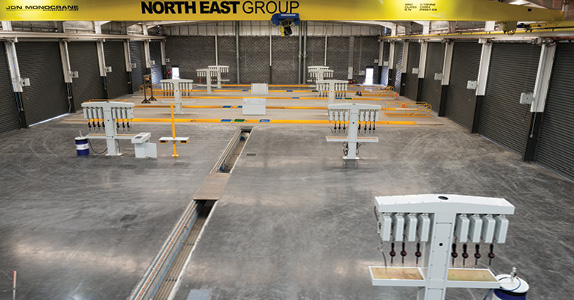
A-FLO was involved in the design, engineering, delivery and commissioning of the fluid and air reticulation systems for North East Group's new 21-bay service centre in South Australia.
The project included RAASM hose gantries, bulk oil storage tanks, high-flow oil pumps, retractable hose reels, more than 4,000 metres of stainless steel fluid pipework and flexible hose, an air ring main and high-flow grease systems. It is a strong example of how a workshop's fluid and air infrastructure can be engineered as a complete system rather than a collection of individual products.
Jarvis Group: Gepps Cross
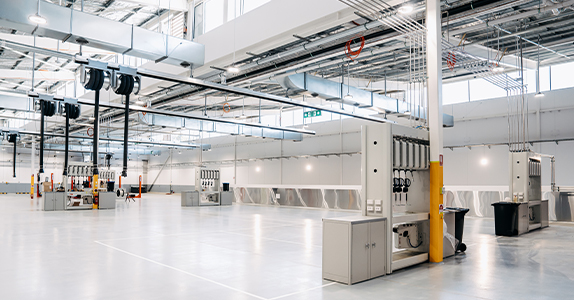
For Jarvis Group, A-FLO delivered an integrated workshop solution incorporating stainless steel oil, air and water reticulation, RAASM hose reel gantries, oil dispensing guns, custom workshop benches and an exhaust extraction system. The project was managed from design through to final commissioning.
EMS Euro Motorsport
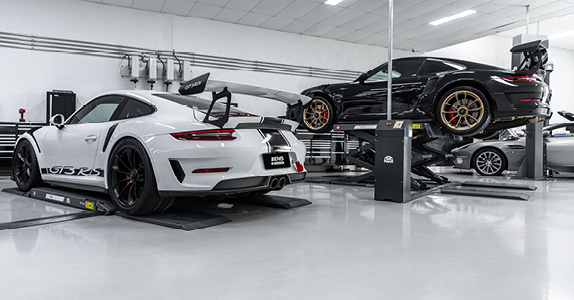
At EMS Euro Motorsport, A-FLO upgraded the workshop with new pipework, hose reels, a workshop bench oil tank package and RAASM oil pumps integrated into the workshop's lubrication system. The complete system was commissioned by A-FLO, with RAASM equipment installed under a 10-year warranty.
Future-Proof Your Automotive Workshop
A workshop should be designed for more than today's requirements. These considerations are easier and more cost-effective to address during the design stage than after the workshop is operational.
| Consideration |
The question to ask at design stage |
| Future workshop expansion |
Can additional bays or equipment be incorporated without completely redesigning the infrastructure? |
| Changing vehicle technology |
Does the workshop have the flexibility to accommodate evolving vehicle servicing requirements? |
| Technician productivity |
Are fluids, air, tools and equipment available where technicians need them? |
| Workshop safety |
Are hoses, pipework, dispensing points and equipment positioned to minimise unnecessary movement and hazards? |
| Environmental considerations |
Are waste fluids and spill management properly incorporated into the design? |
| Total cost of ownership |
Will the equipment and infrastructure provide reliable service over the life of the workshop? |
Why Work With A-FLO?
A-FLO is not simply an equipment supplier. We provide end-to-end workshop fitout solutions, which means dealerships do not have to coordinate multiple suppliers for every element of the workshop.
Scope 1
End to end
Scoping, site assessment and design, through equipment specification, supply and delivery, to installation, commissioning and handover.
Scope 2
One point of contact
No separate appointments for the designer, the fluid specialist, the air contractor and the installer, and no gaps between them.
Scope 3
Sector experience
Automotive dealerships, truck workshops, fleet facilities and specialist workshops, so the practical requirements are already understood.
Scope 4
Comprehensive range
A full range of workshop equipment and infrastructure, so the solution is built around the operation, not the other way around.
A-FLO Equipment: NSW Service Areas
Design input is worth most early, and that is easier when the fitout team is involved before the workshop is built. A-FLO delivers, installs and commissions workshop fitout solutions and fuel and fluid handling equipment across NSW's major industrial regions, including:
| Region |
Industrial centres and precincts |
| Sydney metro |
Wetherill Park, Smithfield, Alexandria, Seven Hills, Botany, Prestons, and the emerging Western Sydney Aerotropolis precinct |
| Hunter and Newcastle |
Newcastle, Tomago, Mayfield, and the wider Hunter Valley industrial corridor |
| Central Coast |
Somersby and Berkeley Vale industrial estates |
| Regional NSW |
Tamworth and New England, Wagga Wagga, Parkes, Albury, and Moree |
From metro logistics hubs to regional manufacturing and agribusiness precincts, A-FLO equips workshops across transport, mining, agriculture and fleet maintenance operations throughout the state. Workshop fitouts are delivered, installed and commissioned nationwide from A-FLO's Melbourne and Perth operations.
Planning a New Dealership Workshop in NSW?
The earlier you involve your workshop fitout partner, the more opportunity there is to optimise the design. Whether you are developing a new automotive dealership, expanding an existing workshop, refurbishing a service centre or upgrading workshop equipment in NSW or across Australia, A-FLO can help you develop a complete solution from the ground up. Talk to the A-FLO team about your next automotive workshop project.
A-FLO offers a free on-site audit of your lubricant and fuel storage, along with a no-obligation quote. For compliance questions or expert guidance, talk to the workshop specialists directly.
Sam Cook, Workshops and Projects Manager: 0439 025 266 or Sam@aflo.com.au
Patrick Chisholm, Workshop Fitouts and Installations BDM: 0499 994 027 or Patrick.Chisholm@aflo.com.au
General enquiries: 1300 235 623 or sales@aflo.com.au
Designing a New Automotive Workshop: Common Questions
What should you consider first when designing a new automotive workshop?
How the workshop will operate, before any equipment is selected. That means how many vehicles will be serviced each day, what types of vehicles will enter the facility, which fluids technicians will need, where dispensing points should sit, how far technicians will have to walk, where waste oil will be collected, where compressed air is required, and whether future bays need to be accommodated. Those answers then drive the layout and the position of pipework, hose reels, tanks, benches and dispensing equipment.
Why does fluid management need to be part of the workshop design?
Because retrofitting it is expensive and it shapes how technicians move. Oil and lubrication systems are fundamental to an automotive workshop, yet fluid management is often treated as an afterthought. A properly designed system gives technicians convenient access to the fluids they need at the point of service and reduces unnecessary movement around the workshop. For larger facilities, centralised fluid storage and reticulation is a cleaner and more organised alternative to moving drums and containers around the floor.
Should compressed air and exhaust extraction be designed in from the start?
Yes. Compressed air is an essential service in many automotive workshops, so the air system needs to be considered as part of the overall workshop infrastructure rather than added later, with reticulation and service points positioned where technicians need them and backed by an appropriate screw air compressor system. Exhaust extraction is the same: incorporating it into the original design produces a more integrated result than treating it as an add-on once the workshop is already operational.
How do you future-proof an automotive workshop?
Design for more than today's requirements. Ask whether additional bays or equipment can be incorporated without redesigning the infrastructure, whether the workshop can flex to meet evolving vehicle servicing requirements, whether fluids, air, tools and equipment are available where technicians need them, whether hoses, pipework and dispensing points are positioned to minimise unnecessary movement and hazards, whether waste fluids and spill management are properly incorporated, and whether the equipment will provide reliable service over the life of the workshop. All of it is easier and cheaper to address at design stage.
Why does it matter that workshop equipment is specified as a system?
Because the individual products are interdependent. A hose reel is not simply a hose reel: its location, hose length, fluid type, pump selection, pipework route and dispensing point all need to work together. The same applies to bulk oil tanks, pumps, metering equipment, compressed air, exhaust extraction, service pits and workshop benches. Specifying them separately is how workshops end up with equipment that works individually but not as a whole.
When should A-FLO be involved in a new workshop project?
The earlier the better, because the earlier a workshop fitout partner is involved, the more opportunity there is to optimise the design. A-FLO can manage the project from scoping, site assessment and design, through equipment specification, supply and delivery, to installation, commissioning and handover, for dealerships and workshops in NSW and across Australia.
Where in NSW does A-FLO work on workshop projects?
Across the state's major industrial regions. That includes the Sydney metro precincts of Wetherill Park, Smithfield, Alexandria, Seven Hills, Botany and Prestons, along with the emerging Western Sydney Aerotropolis; Newcastle, Tomago, Mayfield and the broader Hunter Valley industrial corridor; the Somersby and Berkeley Vale industrial estates on the Central Coast; and regional centres including Tamworth and New England, Wagga Wagga, Parkes, Albury and Moree. The workshops involved span transport, mining, agriculture and fleet maintenance.